
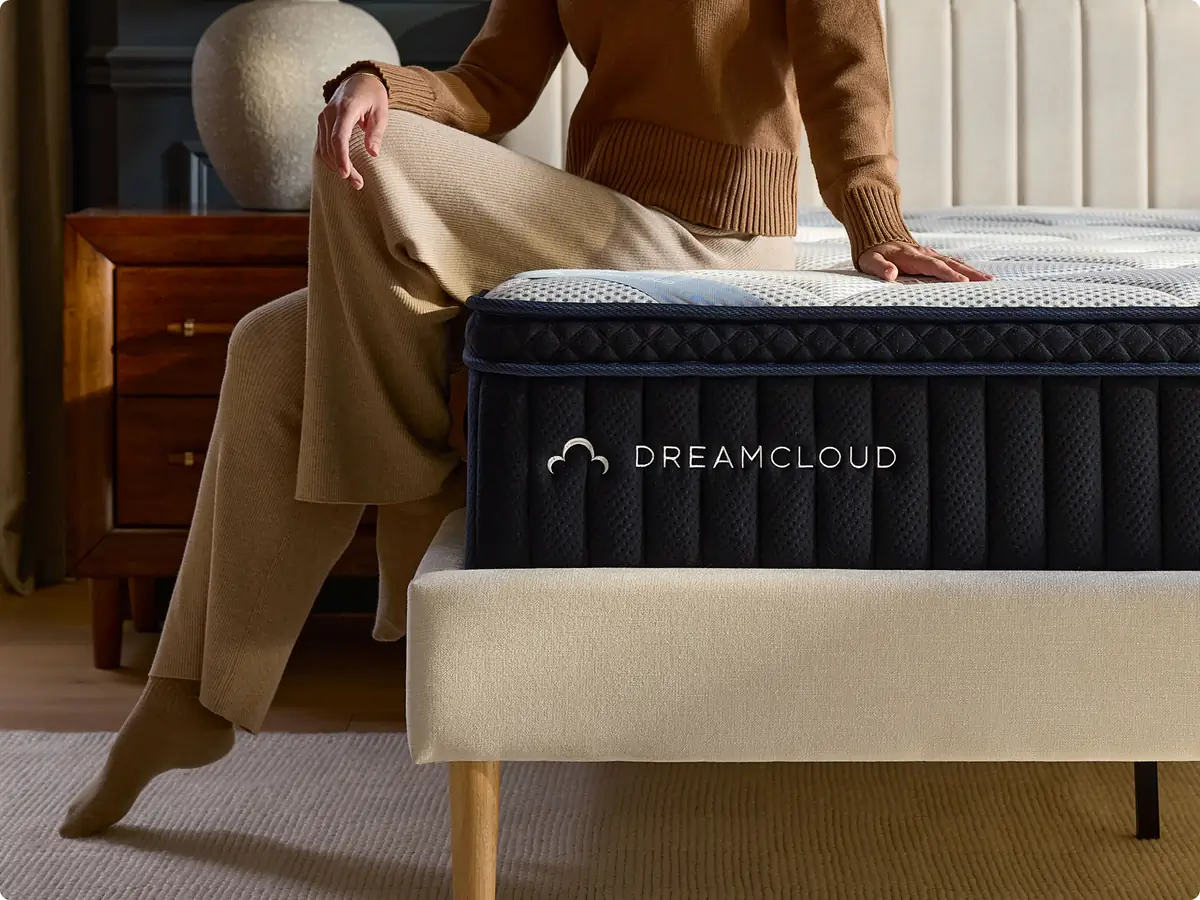
Side-by-side mattress testing · 144+ comparisons published
Quick Specs Comparison
Manufacturer Specs Compared
Figures each brand publishes on its own product page. Values a brand does not publish show as "Not published".
| Spec | Nolah | DreamCloud |
|---|---|---|
| Profile height | 15" | 13.5" |
| Layers published | 7 | 5 |
| Cover material | ArcticTex cooling cover | Not published |
| Coil count | Not published | Not published |
| Coil gauge | 13.5 gauge centre, 14.75 gauge head/foot, 15.5 gauge edge | Not published |
| Zoning | Tri-zone coil unit, firmest through the lumbar region | Not published |
| Foam density | Not published | Not published |
| Fire barrier | Not published | Not published |
| Certifications | Not published | Not published |
| Made in | Not published | Made in the USA |
| Queen dimensions | Not published | Not published |
| Queen weight | Not published | Not published |
Sources: Nolah official page · DreamCloud official page
Key Advantages
Why Choose Nolah
- Better pressure relief for side sleepers
- Cooler-sleeping AirFoam comfort layer
- Three firmness options
Why Choose DreamCloud
- $700 cheaper at Queen
- 365-night trial vs 120 nights
- Cashmere-blend cover feels plush and luxurious
Lab Verdict
Nolah ran measurably cooler in our 60-minute body-heat test (3°F surface rise vs. 3.8°F on the DreamCloud). Couples should note that the Nolah dampened motion more aggressively (0.09g peak vs. 0.21g). Pressure mapping put both beds well under the 32 mmHg capillary-closure threshold for side sleepers. Perimeter compression was nearly identical — neither bed is the obvious pick on edge support alone. Combo sleepers will get more rebound from the Nolah (58% bounce vs. 38%).
| Metric | Nolah | DreamCloud | Edge |
|---|---|---|---|
| Cooling (60-min Δ°F) | 3°F | 3.8°F | Nolah |
| Motion isolation (g) | 0.09g | 0.21g | Nolah |
| Edge sinkage | 2" | 2" | Tie |
| Shoulder pressure (mmHg) | 30 mmHg | 31 mmHg | Nolah |
| Response time (s) | 0.6s | 0.5s | DreamCloud |
| Off-gassing | 2 days | 2 days | Tie |
Median of 3 trials, 68°F climate-controlled lab. KW/BT / KW · scoring vv2.1.