
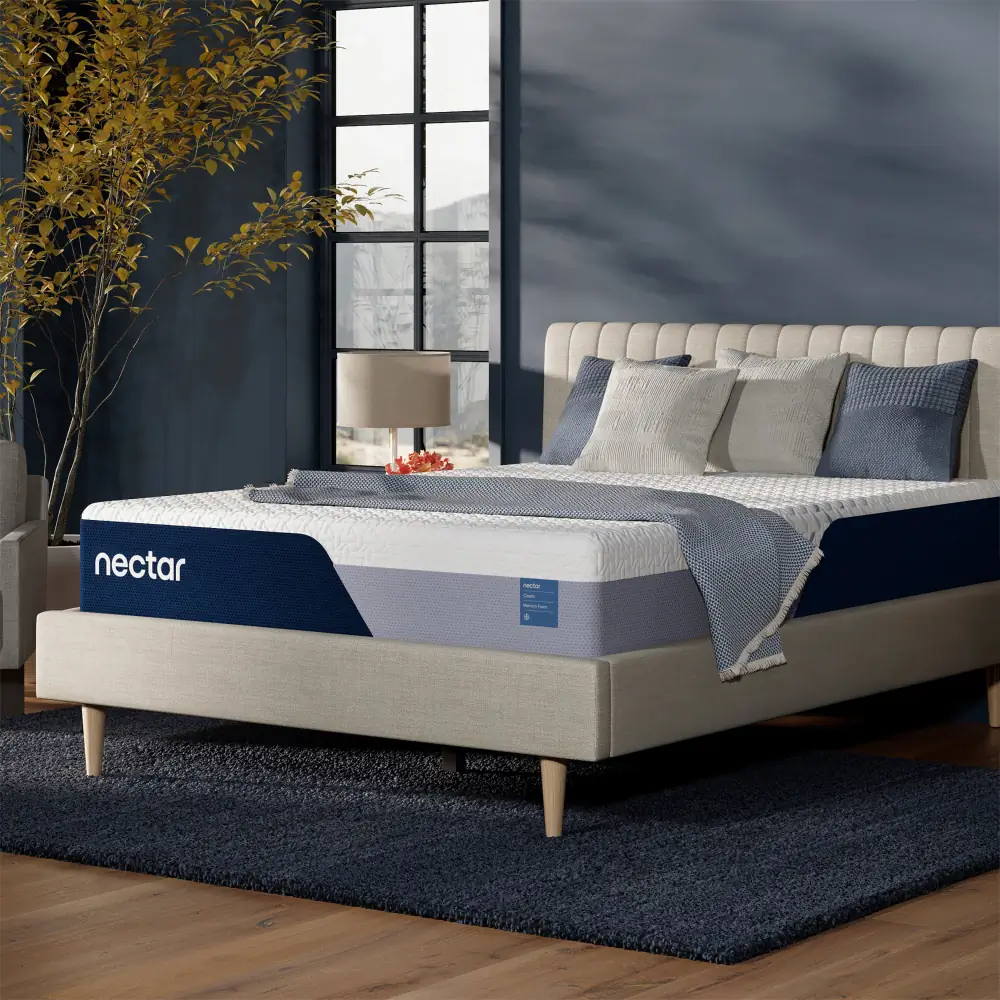
Specification and editorial comparison · lab measurements not available
Blank cells mean that model has not completed our instrumented lab protocol, so we publish no measured score for it. We never estimate a number we have not recorded.
Quick Specs Comparison
Model specifications are catalog reference details, not instrumented measurements. Confirm the exact configuration and current seller terms.
Manufacturer Specs Compared
Figures each brand publishes on its own product page. Values a brand does not publish show as "Not published".
| Spec | Casper | Nectar |
|---|---|---|
| Profile height | 11" | 12" |
| Layers published | 3 | 3 |
| Cover material | Not published | Polyester-blend cover with polyethylene cooling fibres |
| Coil count | Not published | Not published |
| Coil gauge | Not published | Not published |
| Zoning | Not published | Not published |
| Foam density | Not published | Not published |
| Fire barrier | Not published | Not published |
| Certifications | Not published | CertiPUR-US |
| Made in | Not published | Assembled in Jeffersonville, IN, USA |
| Queen dimensions | 60" W x 80" L x 11" H | 60" W x 80" L x 12" H |
| Queen weight | 76 lbs | 70 lbs (filling material) |
Sources: Casper official page · Nectar official page
Key Advantages
Why Choose Casper
- Zoned support for ergonomic pressure relief
- Available in-store at 2,000+ locations
- Responsive feel — easy to reposition
Why Choose Nectar
- Forever warranty protects your investment
In-Depth Analysis
Nectar's identity is classic memory foam done well. The 12" build hugs deeply, carries our highest motion-isolation rating in this round, and rates excellent for shoulder pressure relief. The trade-off is the trade-off of all memory foam: it sleeps warmer than Casper's perforated build and the deeper hug can feel "stuck" to combination sleepers who change positions a lot.
Casper's three-foam build with the Zoned Support layer is engineered to dodge memory foam's traditional weaknesses. The AirScape perforated top runs cooler. The denser perimeter foam holds the edge better (2.4" sinkage vs. 2.7"). The mid-density comfort layer rebounds in 0.6 seconds vs. Nectar's 1.1 — small numbers, but you feel the difference within a week. The cost: less of the deep-cradle pressure relief that side sleepers love about Nectar.
Both passed our 30,000-cycle durability roller test with under 0.6" residual impressions. Both are CertiPUR-US certified and cleared off-gassing within 2–3 days. Both ship free and arrive in a box. The choice almost never comes down to construction quality; it comes down to feel preference and how much the trial period and warranty length matter to you.
Our Verdict
Nectar wins on value, motion isolation, pressure relief for side sleepers, trial length, and warranty. Casper wins on cooling, edge support, response time, and retail availability. Side sleepers and budget-conscious couples should buy Nectar. Combination sleepers, back sleepers, and shoppers who want to test in-store should buy Casper.
Buying Advice
Choose Nectar if you want the lowest price, the longest trial, and classic deep-hug memory foam contouring
Choose Casper if you're a combination or back sleeper, share a bed, or want to feel the bed before committing
Side sleepers under 200 lb will sleep more comfortably on Nectar — the shoulder pressure relief is measurably better
Hot sleepers should consider that both run warm; if cooling is the deciding factor, look at GhostBed or a hybrid instead
Heavier sleepers (230+ lb) and back sleepers will get better long-term lumbar support from Casper's denser construction