Updated May 2026
Engineered Sleep Mattress Review
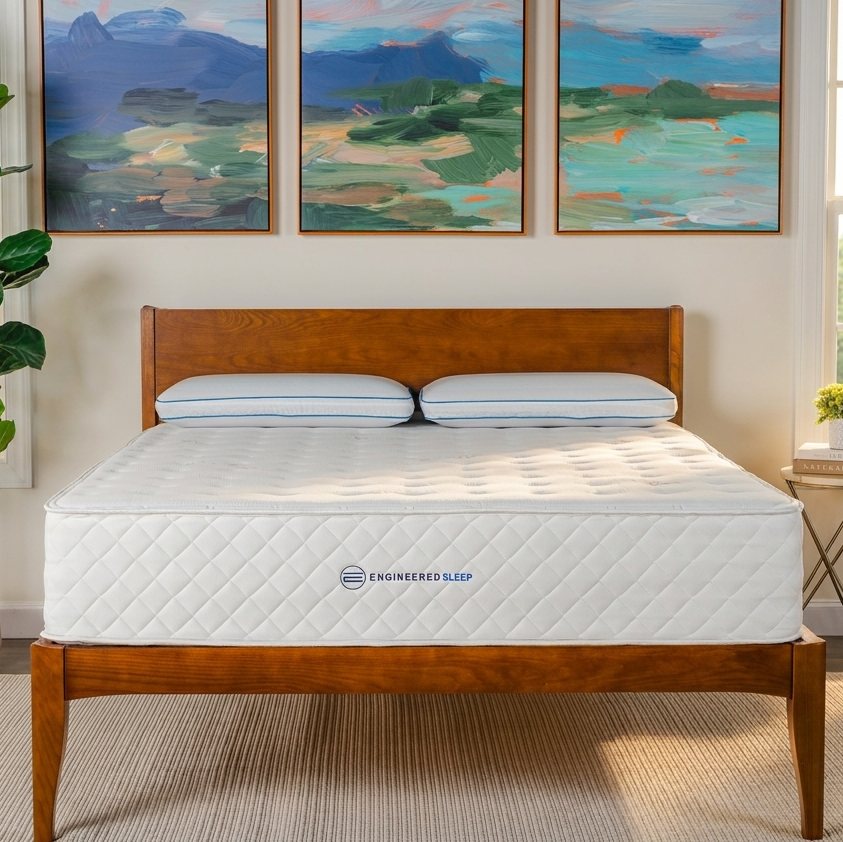
Hybrids sold on published foam densities and coil specs rather than marketing names.
Founded
2019
Headquarters
United States
Models covered
1
About Engineered Sleep
Engineered Sleep exists for the shopper who wants to know the foam density in pounds per cubic foot before they want to know what the comfort layer is called.
Almost no mainstream mattress brand publishes real specifications. Engineered Sleep does: layer-by-layer foam densities, coil counts, coil gauges and cover composition are listed for every model, which makes the beds directly comparable against anything else on the market.
The result is a small lineup of neutral, medium-firm hybrids that use higher-density comfort foam than is typical at their price. The catch is that this is a small company — a 100-night trial and a 10-year warranty rather than the year-long trials the big names advertise.
What they make
Spec-disclosed hybrid mattresses with published foam densities and coil specifications.
Origin
American — US-assembled hybrids
Engineered Sleep Signature Technologies
Published Specifications
Foam densities, coil counts and gauges published per layer so the mattress can be compared objectively against competitors.
High-Density Comfort Foam
Comfort layers selected for density and durability rather than immediate softness, which is what determines how long a foam bed lasts.
Reinforced Perimeter Coils
Firmer edge coil rows that hold up to sitting and make getting in and out easier.
Best for
- Spec-driven shoppers who read density before reviews
- Back and combination sleepers
- Couples wanting a neutral compromise firmness
- Value buyers under $1,500
Not ideal for
- Strict side sleepers wanting plush contour
- Buyers who want a full-year trial
- Anyone who prefers a well-known brand name
Every Engineered Sleep Mattress We've Reviewed
How Much Does a Engineered Sleep Mattress Cost?
Engineered Sleep queens run $900–$1,700 across the lineup (value to mid tier). The table below estimates the rest of the size ladder from that queen range using the standard size pricing brands apply — the low column tracks the entry model, the high column the flagship. Treat these as planning estimates rather than quotes: promotions move real street prices by 20–30% for weeks at a time.
| Size | Dimensions | Entry model (est.) | Flagship (est.) |
|---|---|---|---|
| Twin | 38" × 75" | $555 | $1,055 |
| Twin XL | 38" × 80" | $595 | $1,120 |
| Full | 54" × 75" | $735 | $1,395 |
| Queen | 60" × 80" | $900 | $1,700 |
| King | 76" × 80" | $1,150 | $2,175 |
| California King | 72" × 84" | $1,150 | $2,175 |
Estimates based on Engineered Sleep's published queen pricing and the standard US size ladder. Free shipping in the continental US. 100-night trial; 10-year warranty.
How to Pay Less for a Engineered Sleep
Pricing, Trial & Warranty
Price range (Queen)
$899–$1,699
Value to mid
Strong — higher published densities than typical at the price
Trial period
100-night trial
10-year warranty
Shipping
Free shipping in the continental US
Financing
Financing available
Pros
- Publishes real foam densities and coil specs
- Higher-density comfort foam than typical at the price
- Neutral medium-firm feel suits most sleepers
- Reinforced edges
Cons
- 100-night trial rather than the 365-night standard
- 10-year warranty is average
- Limited independent review volume
- Neutral feel is unremarkable if you want a distinctive hug or bounce
Engineered Sleep FAQ
Why does foam density matter?
Density predicts how long a foam layer keeps its shape. Low-density comfort foam feels identical to high-density foam in the showroom and develops a body impression years earlier. It is the single most useful spec for judging durability, and almost nobody publishes it.
Is Engineered Sleep worth buying over a big brand?
If you care about verifiable construction quality per dollar, yes — you can check the specs rather than trust the marketing. If you want a long trial window and a large service organization behind the warranty, a bigger brand is the safer choice.
How firm is the Engineered Sleep Hybrid?
Medium-firm, around 6.5 on the 10-point scale. It is a neutral surface — no deep hug, no aggressive bounce — which suits back and combination sleepers best.
Compare to Other Brands
SaatvaTempur-PedicHelixPurpleNectarDreamCloudBearAvocadoCasperLaylaSertaSealyBeautyrestStearns & FosterKingsdownAireloomBrooklyn BeddingNest BeddingBrentwood HomeLeesaRestonicSpring AirSleep NumberTherapedicSoutherlandWinkBedsNolahGhostBedBirchAmerisleepPuffyPlushBedsTuft & NeedleEmmaAwaraZinusLullSienaBig FigEight SleepNaturepedicMy Green MattressIDLE SleepSilk & SnowNovosbedSpindleEco TerraEssentiaKing KoilZomaAllswellLucidNapQueenMoleculeAirweaveCharles P. RogersDiamond MattressSweetNightTechnogelPolysleepNovaformIKEASleep EZFloBedsDLX MattressPersonal ComfortAir-PedicLinenspaClassic BrandsOlee SleepVibeHästensVispringKluft