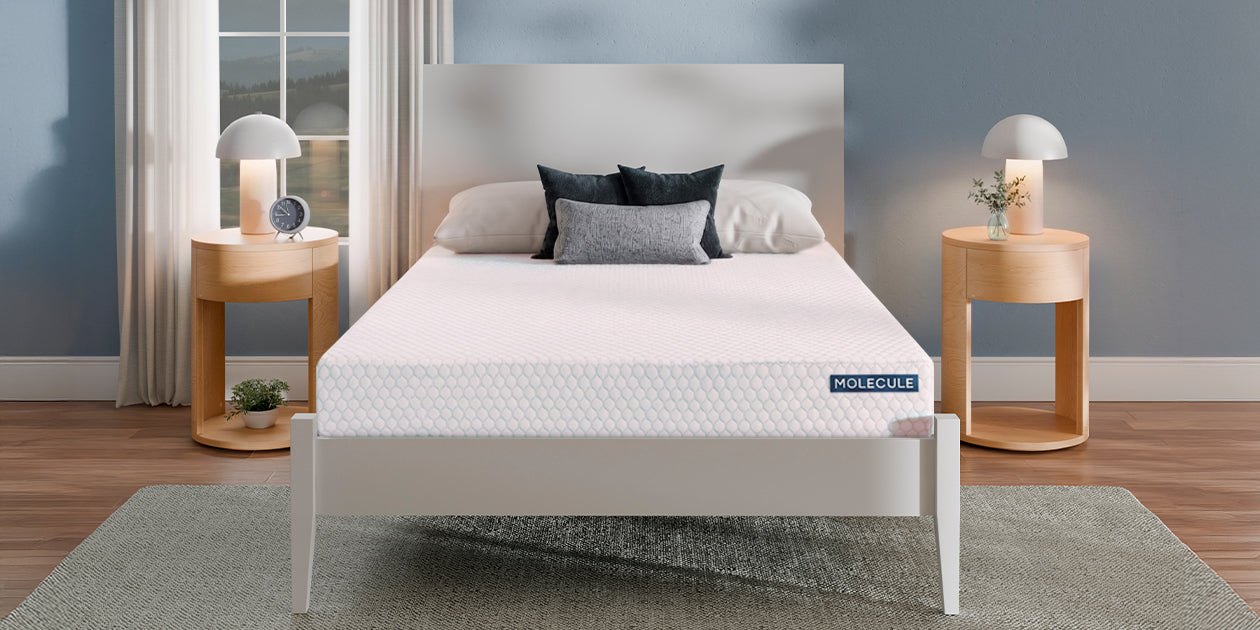
Updated May 2026
Molecule Mattress Review
Airflow-obsessed foam beds built around recovery sleep.
Founded
2017
Headquarters
Miami, Florida
Models covered
1
About Molecule
Molecule was built around one claim: airflow. The brand's Air-Engineered foam layers use channelled and variable-density constructions intended to move heat away from the sleeper faster than conventional memory foam.
The line is compact — the Molecule 1, the 2 AirTEC, and the premium 3 AirTEC — with each step adding comfort-layer depth and cover technology rather than changing the underlying philosophy.
In our thermal testing the AirTEC models do run cooler than standard memory foam at the same density, though a coil hybrid with a breathable cover still beats them. The bigger advantage is the responsive, buoyant feel: this is foam that lets you turn over easily.
What they make
Airflow-engineered all-foam mattresses, recovery-focused toppers, pillows and sheets aimed at athletes.
Origin
American — made in the USA
Molecule Signature Technologies
Air-Engineered Foam
Channelled and variable-density foam layers designed to vent heat laterally instead of trapping it under the body.
AirTEC Cover
A high-loft, high-permeability cover fabric that measurably improves surface airflow versus a standard quilted panel.
RecoveryFlo Layers
The brand's responsive transition foam, which keeps the bed from feeling slow when you change position.
Best for
- Hot sleepers who still want an all-foam bed
- Athletes and heavy trainers focused on recovery
- Combination sleepers who dislike slow memory foam
- Buyers who want US-made foam with a long trial
Not ideal for
- Shoppers who want coils and bounce
- Heavier sleepers needing a reinforced support core
- Bargain hunters — pricing sits above value foam brands
Every Molecule Mattress We've Reviewed
How Much Does a Molecule Mattress Cost?
Molecule queens run $900–$2,200 across the lineup (mid tier). The table below estimates the rest of the size ladder from that queen range using the standard size pricing brands apply — the low column tracks the entry model, the high column the flagship. Treat these as planning estimates rather than quotes: promotions move real street prices by 20–30% for weeks at a time.
| Size | Dimensions | Entry model (est.) | Flagship (est.) |
|---|---|---|---|
| Twin | 38" × 75" | $555 | $1,365 |
| Twin XL | 38" × 80" | $595 | $1,450 |
| Full | 54" × 75" | $735 | $1,805 |
| Queen | 60" × 80" | $900 | $2,200 |
| King | 76" × 80" | $1,150 | $2,815 |
| California King | 72" × 84" | $1,150 | $2,815 |
Estimates based on Molecule's published queen pricing and the standard US size ladder. Free shipping, compressed in a box. 100-night trial; 10-year limited warranty.
How to Pay Less for a Molecule
Pricing, Trial & Warranty
Price range (Queen)
$899–$2,199
Mid
Fair — you pay for the cooling engineering
Trial period
100-night trial
10-year limited warranty
Shipping
Free shipping, compressed in a box
Financing
0% APR financing available
Pros
- Cooler than typical all-foam constructions
- Responsive feel that avoids the memory-foam sink
- Made in the USA
- Strong recovery-focused topper and pillow range
Cons
- Still an all-foam bed — a hybrid will sleep cooler
- Edge support is average
- Fewer independent long-term durability data points than larger brands
Molecule FAQ
Does the Molecule mattress actually sleep cool?
Cooler than a conventional dense memory foam bed, yes — the channelled foam and high-permeability cover both help in our thermal imaging. If overheating is your single biggest problem, a coil hybrid with a phase-change cover will still outperform it.
Which Molecule model should I pick?
The Molecule 1 is the entry bed and best for back sleepers or those under 180 lb. The 2 AirTEC adds comfort depth and suits most side sleepers. The 3 AirTEC is the plushest and the coolest of the three.
Is Molecule good for athletes?
That is the brand's target market and the responsive, quick-recovery foam does make repositioning easier than slow memory foam. The recovery framing is marketing, but the feel is genuinely well-suited to people who move a lot in their sleep.
Compare to Other Brands
SaatvaTempur-PedicHelixPurpleNectarDreamCloudBearAvocadoCasperLaylaSertaSealyBeautyrestStearns & FosterKingsdownAireloomBrooklyn BeddingNest BeddingBrentwood HomeLeesaRestonicSpring AirSleep NumberTherapedicSoutherlandWinkBedsNolahGhostBedBirchAmerisleepPuffyPlushBedsTuft & NeedleEmmaAwaraZinusLullSienaBig FigEight SleepNaturepedicMy Green MattressIDLE SleepSilk & SnowNovosbedSpindleEco TerraEssentiaKing KoilZomaAllswellLucidNapQueenAirweaveCharles P. RogersDiamond MattressSweetNightTechnogelPolysleepNovaformIKEASleep EZFloBedsDLX MattressEngineered SleepPersonal ComfortAir-PedicLinenspaClassic BrandsOlee SleepVibeHästensVispringKluft