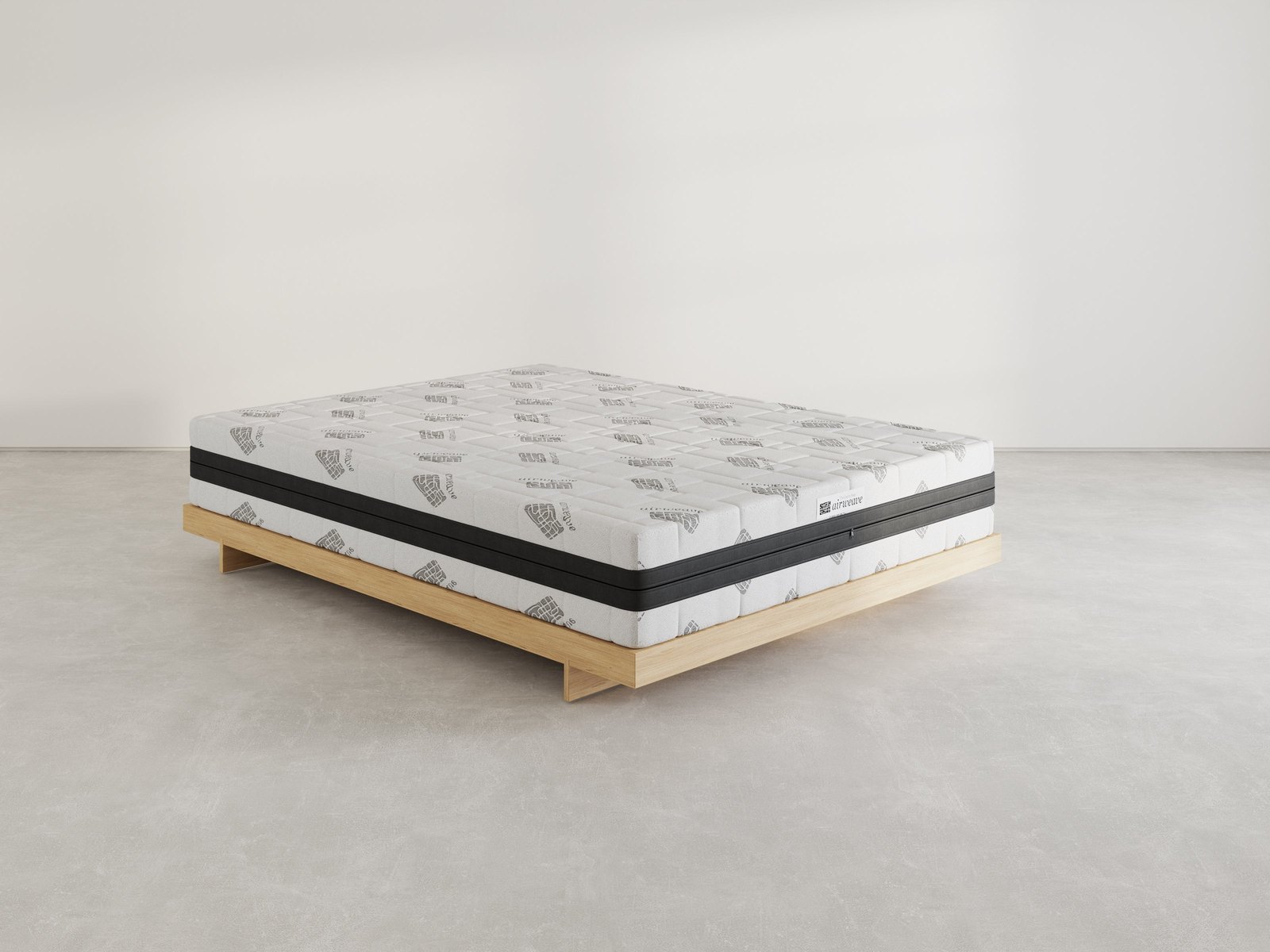
Updated May 2026
Airweave Mattress Review
Washable, fully recyclable airfiber mattresses from Japan.
Founded
2007
Headquarters
Tokyo, Japan (US operations in New York)
Models covered
1
About Airweave
Airweave uses no foam and no coils. Its mattresses are built from airfiber, a springy extruded polyethylene resin mesh that looks like a tangle of fine noodles and is more than 90 percent air by volume.
The material's headline feature is that it can be unzipped, taken out, and washed in the shower — a genuine advantage for allergy sufferers, kids, and anyone who has ever ruined a mattress.
Airweave supplied the beds for the Olympic Villages in Rio, Tokyo and Paris, which is where most Americans first encountered it. The feel is unlike any foam bed: firm, extremely responsive, and cool, with no contour hug at all.
What they make
Airfiber mattresses, mattress toppers, adjustable-height pillows and futon-style bedding.
Origin
Japanese — airfiber produced in Japan
Airweave Signature Technologies
Airfiber Core
An extruded polyethylene mesh that is over 90 percent air, providing spring-like support with almost no heat retention.
Washable Construction
The core can be removed and rinsed with water, and the cover is machine washable — unique in the mattress category.
Modular Firmness Blocks
Cores split into sections that can be rotated or swapped to tune firmness under the shoulders and hips.
Best for
- Allergy sufferers and anyone who wants a hygienic, washable bed
- Very hot sleepers — airfiber barely retains heat
- Back and stomach sleepers who want a firm, responsive surface
- Athletes and buyers who want easy repositioning
Not ideal for
- Side sleepers who want deep shoulder pressure relief
- Anyone who likes a plush or contouring feel
- Budget shoppers — pricing is premium
- People bothered by a faint rustle when moving
Every Airweave Mattress We've Reviewed
How Much Does a Airweave Mattress Cost?
Airweave queens run $1,500–$4,000 across the lineup (premium tier). The table below estimates the rest of the size ladder from that queen range using the standard size pricing brands apply — the low column tracks the entry model, the high column the flagship. Treat these as planning estimates rather than quotes: promotions move real street prices by 20–30% for weeks at a time.
| Size | Dimensions | Entry model (est.) | Flagship (est.) |
|---|---|---|---|
| Twin | 38" × 75" | $930 | $2,480 |
| Twin XL | 38" × 80" | $990 | $2,640 |
| Full | 54" × 75" | $1,230 | $3,280 |
| Queen | 60" × 80" | $1,500 | $4,000 |
| King | 76" × 80" | $1,920 | $5,120 |
| California King | 72" × 84" | $1,920 | $5,120 |
Estimates based on Airweave's published queen pricing and the standard US size ladder. Free shipping; modular cores ship in manageable boxes. 100-night trial on mattresses; 3-year warranty on airfiber cores.
How to Pay Less for a Airweave
Pricing, Trial & Warranty
Price range (Queen)
$1,500–$4,000
Premium
Niche — you pay for a material nobody else makes
Trial period
100-night trial on mattresses
3-year warranty on airfiber cores
Shipping
Free shipping; modular cores ship in manageable boxes
Financing
Financing available
Pros
- Washable, hypoallergenic, and fully recyclable
- Sleeps cooler than essentially any foam mattress
- Extremely responsive — no stuck feeling
- Modular design lets you tune and replace sections
Cons
- Very firm with almost no contouring
- Shorter warranty than conventional mattresses
- Audible rustle from the fiber core
- Expensive relative to conventional builds
Airweave FAQ
What is airfiber made of?
Extruded polyethylene resin spun into a fine, interlocking mesh that is more than 90 percent air. It is recyclable, contains no foam or fiberglass, and does not off-gas the way petroleum foams do.
Can you really wash an Airweave mattress?
Yes — the core can be removed from the cover and rinsed with water in a shower or tub, then air-dried. The cover is machine washable. That is the main reason the beds are popular with allergy sufferers and parents.
Is Airweave too firm?
For most side sleepers, yes — expect a firm 7.5 to 8 out of 10 with minimal shoulder and hip contouring. Back and stomach sleepers, and people coming from Japanese-style futons, usually find it ideal.
Were the Olympic beds Airweave?
Airweave supplied mattresses to the Olympic and Paralympic Villages in Rio 2016, Tokyo 2020 and Paris 2024, though the Village beds used cardboard frames from a separate supplier.
Compare to Other Brands
SaatvaTempur-PedicHelixPurpleNectarDreamCloudBearAvocadoCasperLaylaSertaSealyBeautyrestStearns & FosterKingsdownAireloomBrooklyn BeddingNest BeddingBrentwood HomeLeesaRestonicSpring AirSleep NumberTherapedicSoutherlandWinkBedsNolahGhostBedBirchAmerisleepPuffyPlushBedsTuft & NeedleEmmaAwaraZinusLullSienaBig FigEight SleepNaturepedicMy Green MattressIDLE SleepSilk & SnowNovosbedSpindleEco TerraEssentiaKing KoilZomaAllswellLucidNapQueenMoleculeCharles P. RogersDiamond MattressSweetNightTechnogelPolysleepNovaformIKEASleep EZFloBedsDLX MattressEngineered SleepPersonal ComfortAir-PedicLinenspaClassic BrandsOlee SleepVibeHästensVispringKluft