Our top pick is the Nectar Memory Foam, which scores 9.7/10 for motion isolation alongside 9.2/10 of support and 9.4/10 overall, with peak movement transfer measured at 0.06g. The DreamCloud Premier is the closest alternative.
Every mattress below scores at least 8.5/10 for motion isolation and 8/10 for support. Nothing weaker can be ranked here, however good its overall score.
Quick Picks for Motion Isolation
Six awards, all drawn from the same ranked list below.
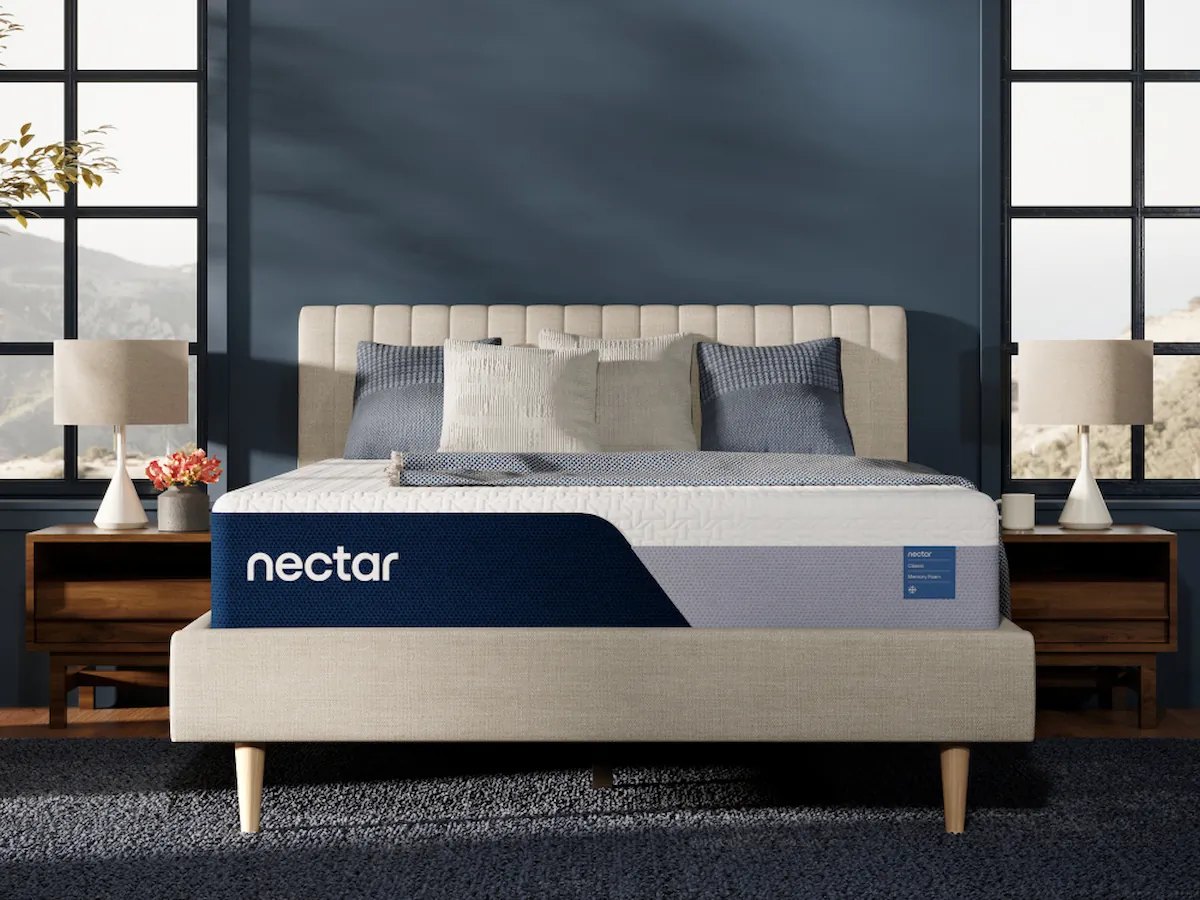
Motion isolation 9.7/10 alongside 9.2/10 of support and a 9.4/10 overall score, with peak movement transfer measured at 0.06g — movement stops where it starts instead of travelling across the bed.
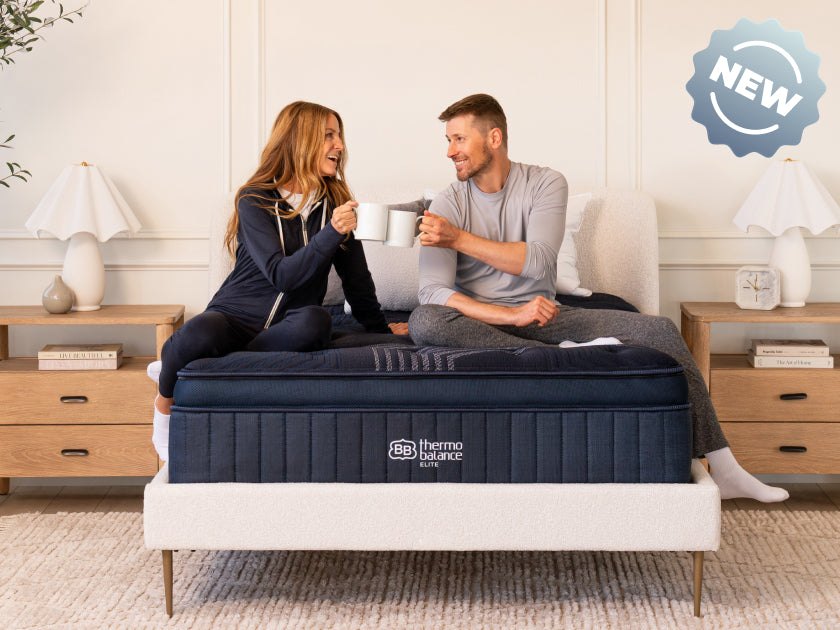
Motion isolation 9.4/10 with 9.2/10 edges — sharing a bed needs both, because a collapsing perimeter pushes two people back toward the middle however still the surface is.
Movement absorption of 9.7/10 over 9.2/10 pressure relief — the pairing that matters if one of you changes position often, since fewer pressure hot spots means fewer position changes to absorb in the first place.
The strongest motion isolation among the hand-built beds that clear our rules, at $44,000 Queen. Deliberately held out of the main ranking because it is not a realistic purchase for most buyers.
Motion isolation leads, because it is the score that decides this ranking, with the raw accelerometer reading beside it wherever the model has completed our physical protocol. Firmness, support and price follow. Every figure comes from the model's record and updates with it.
Motion Isolation comparison by category score, raw measurement, best use, firmness, support, overall score, construction, body-weight range, trial and Queen price
Motion isolation 9.7/10 alongside 9.2/10 of support and a 9.4/10 overall score, with peak movement transfer measured at 0.06g — movement stops where it starts instead of travelling across the bed.
A medium 6.0/10 memory foam build. In our lab, peak movement transfer measured 0.06g at 12 inches from a dropped 10 lb weight, the median of three trials.
The Nectar Memory Foam mattress has earned its reputation as the best value in the industry. With a forever warranty and 365-night trial, Nectar stands behind their product completely. The medium-firm feel works well for most sleepers, and the pressure-relieving memory foam is particularly loved by side sleepers.
The cheapest route to this level of stillness: motion isolation 9.3/10 and a 9.8/10 value score at $1,099 Queen.
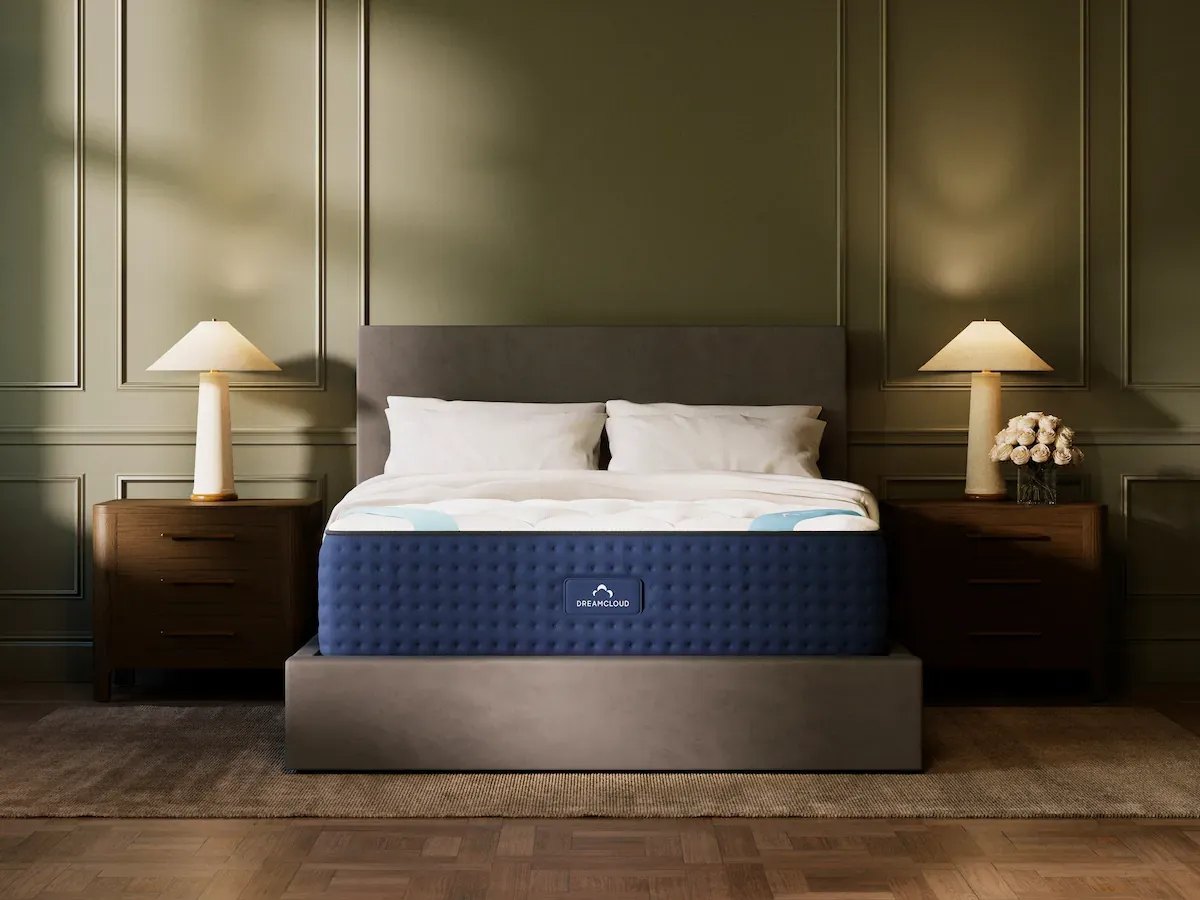
A medium 6.5/10 hybrid build. In our lab, peak movement transfer measured 0.21g at 12 inches from a dropped 10 lb weight, the median of three trials.
The DreamCloud Premier Hybrid is our top-rated mattress for 2026, offering an exceptional balance of luxury comfort and supportive design. With its cashmere-blend cover and gel-infused memory foam, it delivers hotel-quality sleep at a price that won't break the bank. The 13-inch profile includes individually wrapped coils for responsive support and excellent edge stability.
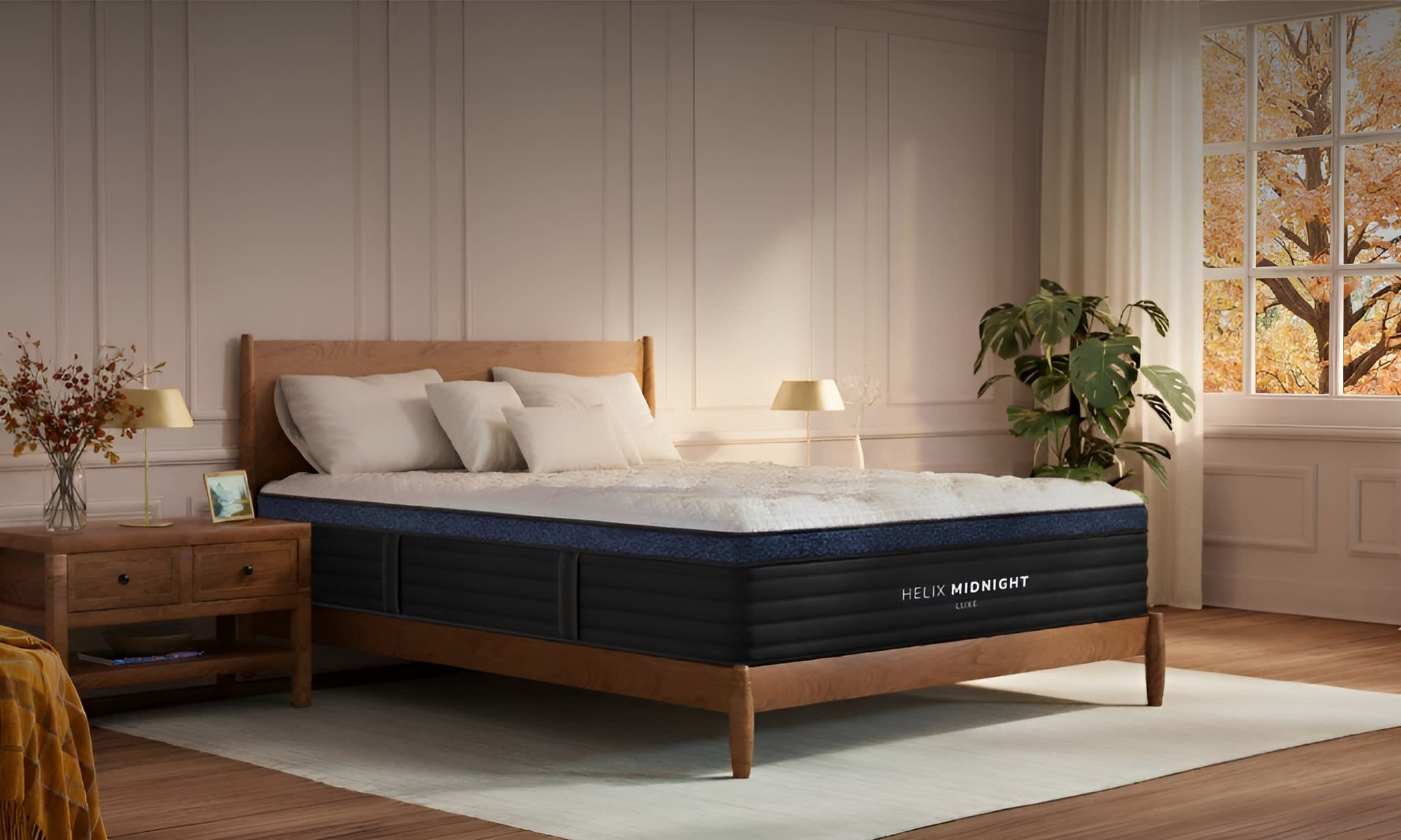
The lowest movement transfer we have recorded among the eligible beds: 0.09g at 12 inches from a dropped 10 lb weight, the median of three trials.
A medium soft 5.5/10 hybrid build. In our lab, peak movement transfer measured 0.09g at 12 inches from a dropped 10 lb weight, the median of three trials.
The Helix Midnight Luxe is our top pick for couples, thanks to its exceptional motion isolation and zoned support system. The Luxe upgrade includes a premium pillow top, GlacioTex cooling cover, and enhanced lumbar support.
Motion Isolation
9.6/10
Peak Movement Transfer
0.09g
Evidence
Lab tested
Firmness
Medium Soft (5.5/10)
Support core
9.5/10
Pressure relief
9.4/10
Overall score
9.3/10
Durability
9.2/10
Construction
Hybrid · 13.5 inches
Body weight suited to
Under 130 lb · 130–230 lb
Sleep trial
120 nights
Warranty
Limited lifetime warranty (purchases on or after 02/01/2025; first 10 years non-prorated)
Motion isolation 9.4/10 with 9.2/10 edges — sharing a bed needs both, because a collapsing perimeter pushes two people back toward the middle however still the surface is.
A medium 6.0/10 hybrid build. This model has not completed our physical lab testing protocol, so its motion-isolation score comes from a research evaluation of the manufacturer's published construction rather than an accelerometer reading we recorded.
The Brooklyn Bedding ThermoBalance Elite is the flagship of the ThermoBalance collection, adding HD 5.0 memory foam, zoned lumbar support, and upgraded 8-inch Ascension Max coils to the already impressive cooling system. With 11 meticulously engineered layers including ThermoCool cover, ThermoPhase foam, and copper-infused HD 4.0 memory foam, this is Brooklyn Bedding's most advanced cooling mattress ever. Available in soft, medium, and firm, the Elite is designed for sleepers who want zero compromises on both cooling and comfort.
Movement absorption of 9.7/10 over 9.2/10 pressure relief — the pairing that matters if one of you changes position often, since fewer pressure hot spots means fewer position changes to absorb in the first place.
A medium 6.0/10 memory foam build. This model has not completed our physical lab testing protocol, so its motion-isolation score comes from a research evaluation of the manufacturer's published construction rather than an accelerometer reading we recorded.
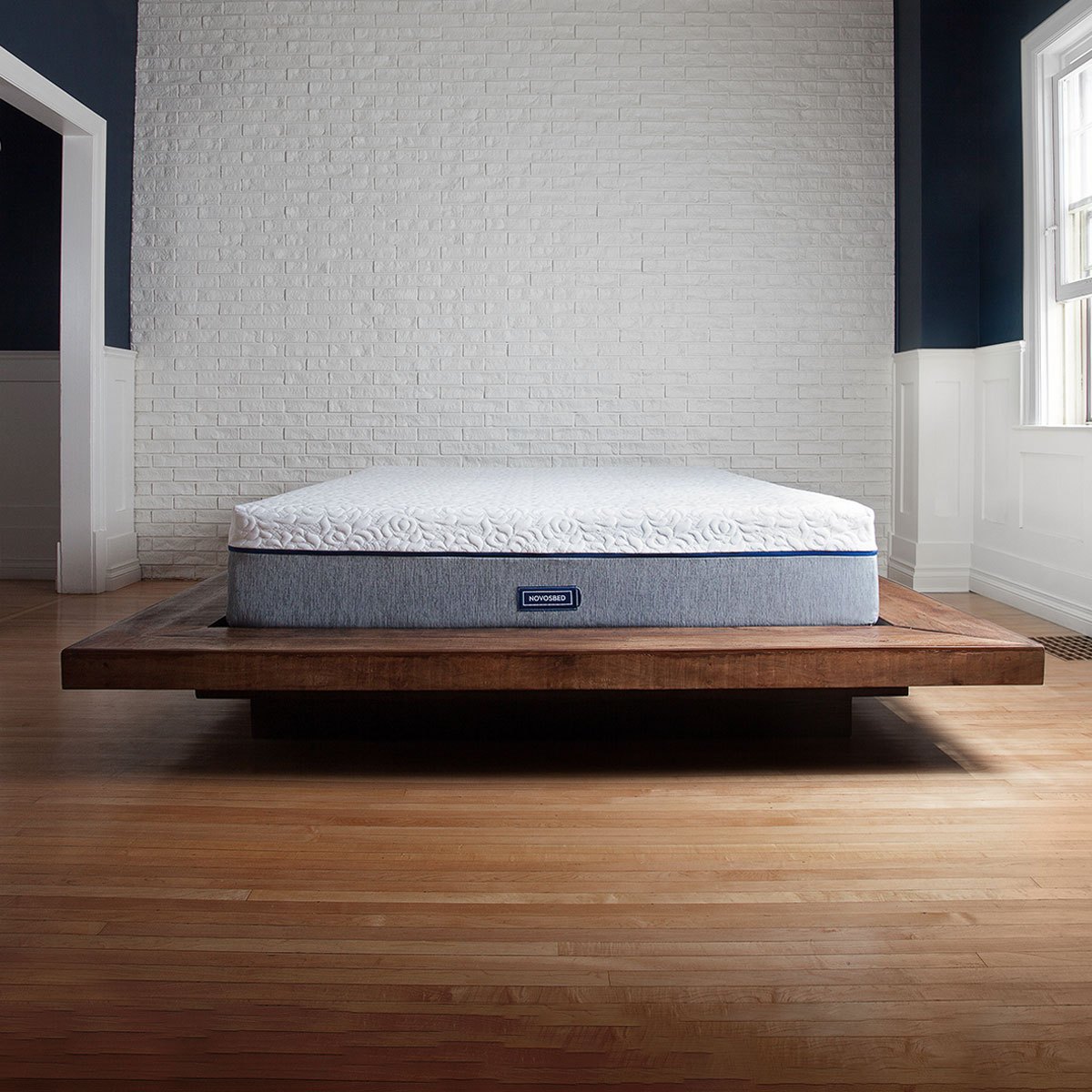
Novosbed is the premium all-foam bed from GoodMorning.com, the independent Edmonton company that also builds Douglas, Logan & Cove, and Juno. It launched in 2009, which makes it one of the original bed-in-a-box mattresses in North America, and it has stayed committed to a classic memory foam feel while most of the category chased hybrids. The build is 11 inches: a 4-inch memory foam comfort section over a 7-inch high-density support core, in a removable Tencel cover. You pick Soft, Medium, or Firm, and if the feel is slightly off, Novosbed ships a free Comfort+ kit — a zip-in half-inch foam layer that nudges the bed softer or firmer without a return. A Queen sits around $999, which is aggressive for foam this dense (3.7 to 5 lb/ft³ published) backed by a 15-year warranty.
Motion Isolation
9.7/10
Peak Movement Transfer
Not lab measured
Evidence
Research evaluated
Firmness
Medium (6.0/10)
Support core
8.7/10
Pressure relief
9.2/10
Overall score
8.8/10
Durability
9.0/10
Construction
Memory Foam · 11 inches
Body weight suited to
130–230 lb
Sleep trial
120 nights (full refund) with free Comfort+ adjustment
The strongest motion isolation among the hand-built beds that clear our rules, at $44,000 Queen. Deliberately held out of the main ranking because it is not a realistic purchase for most buyers.
A medium soft 5.5/10 innerspring build. This model has not completed our physical lab testing protocol, so its motion-isolation score comes from a research evaluation of the manufacturer's published construction rather than an accelerometer reading we recorded.
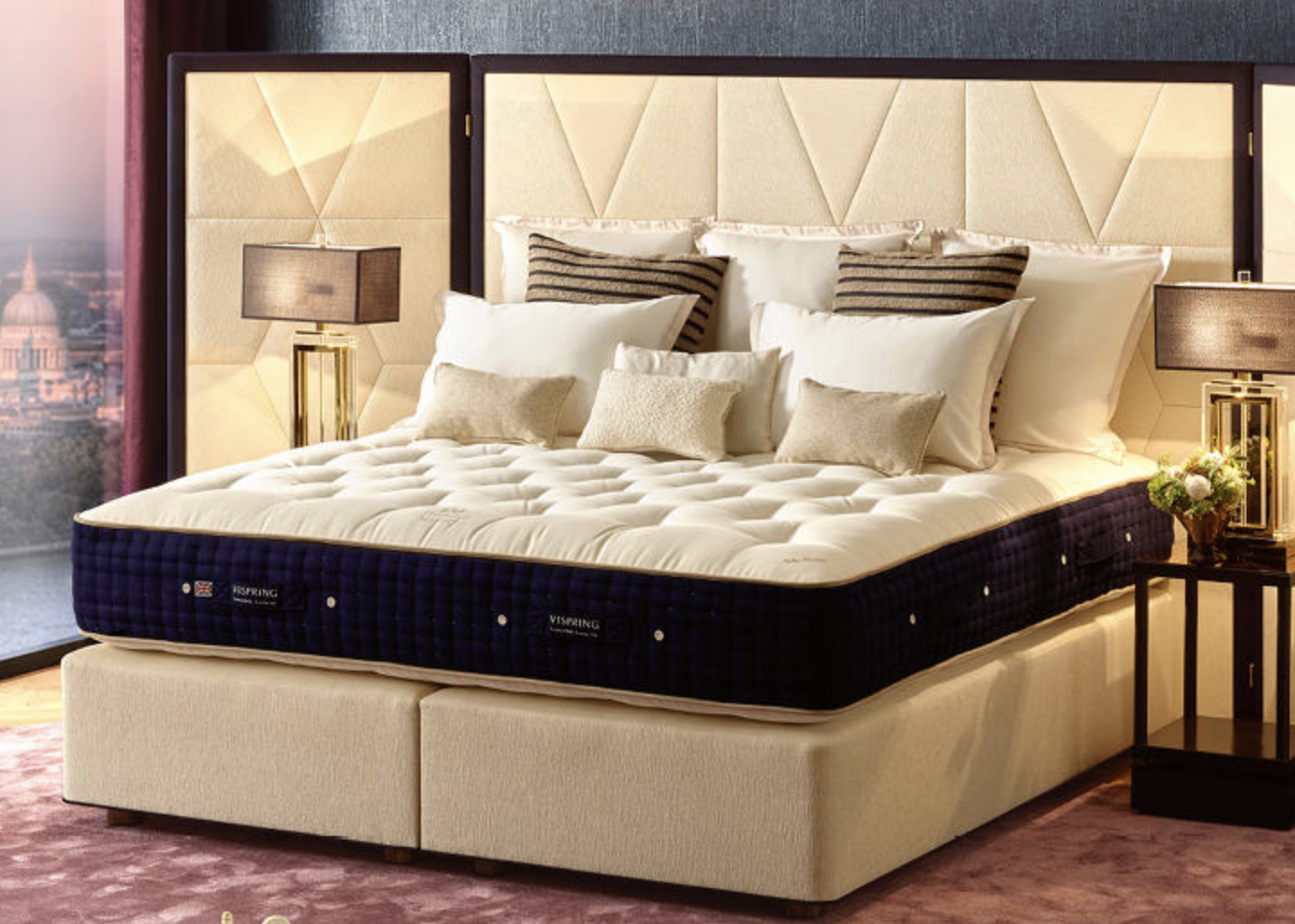
The Diamond Majesty is Vispring's answer to the question of what a mattress looks like when cost is removed from the design brief. It stacks three layers of hand-nested calico pocket springs — a configuration almost no other manufacturer attempts because of the labor involved — beneath comfort layers of British fleece wool, Shetland wool, hand-opened Moosburger horsetail, cashmere, and silk. The triple-spring stack does something a single spring layer cannot: the upper layer contours finely to shoulders and hips while the lower layers handle deep support, so the bed is simultaneously softer at the surface and more supportive underneath than any two-layer design we have tested. Starting around $44,000 for the mattress in King (and considerably more with the matching divan), this is a purchase for buyers comparing it against the Hästens 2000T and Vividus, and against a Savoir No. 1. On pure spring sophistication it arguably leads that group; the Hästens counters with superior moisture handling from horsehair, and Savoir with bespoke sizing. It is sold only through Vispring retailers with custom spring-tension selection, and production takes six to eight weeks.
A shared bed is two people loading the same surface. When that surface passes movement along, the person who did not move is the one who wakes — usually without remembering it in the morning, which is why the problem often gets blamed on everything except the mattress.
Different schedules. If one of you is up hours before the other, motion isolation matters more than any other metric on this site.
Restless partners. Frequent position changes are normal; whether they reach the other side of the bed is a property of the mattress, not the sleeper.
Pets on the bed. A dog jumping up is a far larger impulse than a person turning over, and it is the test most beds fail first.
Light sleepers. Anyone who struggles to get back to sleep after waking pays a bigger price for every transmitted movement.
How We Measure Movement Transfer
For mattresses that have completed our physical protocol, we drop a 10 lb weight onto the surface and record peak acceleration with a sensor 12 inches away, reported in g as the median of three trials in our 68°F lab. Lower readings mean the movement was absorbed rather than carried. Anything under 0.10g is excellent for couples.
That reading is the input to the motion-isolation score, which is the primary factor in this ranking. Overall score, support and edge support come next, so a bed cannot win by being a dead, unsupportive slab, and value acts as the tie-breaker between beds that measure the same.
Models that have not been through the physical protocol carry a research evaluation instead: a score derived from the manufacturer's published construction — comfort layer density, coil pocketing, foam encasement — never from an accelerometer trace we did not record. The table and each write-up say which applies, and those models show "Not lab measured" in the movement-transfer column.
Foam, Latex and Hybrid
Construction type is a weaker predictor here than most buying guides suggest. Our measured results for memory foam, latex and pocketed-coil hybrids overlap heavily, and the spread inside each type is wider than the gap between types. What reliably does transmit movement is a traditional connected-coil innerspring, where every coil is tied to its neighbours.
The trade-off worth knowing about is responsiveness: a surface that absorbs movement completely can also be harder to move around on, which combination sleepers sometimes dislike. That is why support and edge support are weighted here rather than motion isolation alone.
Motion Isolation for Couples
Sharing a bed needs two things at once: a surface that absorbs movement and a perimeter that keeps the outer inches sleepable, because collapsing edges push both people toward the middle however still the centre is. The Brooklyn Bedding ThermoBalance Elite is our pick here: 9.4/10 motion isolation with 9.2/10 edges. Our best mattresses for couples guide weighs both alongside size and temperature.
The Lowest Reading We Have Recorded
When a partner's schedule is the problem, the raw number matters more than the adjective on the box. The Helix Midnight Luxe measured 0.09g, the lowest among the beds eligible for this list. See also our best memory foam mattresses, the construction that most often measures low here.
Motion Isolation and Edge Support Together
These two metrics pull in opposite directions: the reinforcement that stiffens a perimeter also gives movement somewhere to travel. Beds that do both well pair a deeply absorbing comfort layer with an encased rather than rigid edge. Our best mattresses for edge support and best mattresses for pressure relief guides rank the same field on those metrics.
How This Ranking Is Built
Eligibility comes before ranking. A mattress must be currently available, score at least 8.5/10 for motion isolation and at least 8/10 for support. Nothing below those lines can appear.
Motion isolation is the primary factor, with overall score, support and edge support as secondaries and value as the tie-breaker.
Price is a real factor. The main ranking is capped at our mainstream price ceiling, so a bed almost nobody buys cannot become the default answer. Exceptional beds above that line are recognised separately as the luxury pick.
Testing status is stated openly. Lab-tested models carry a measured movement-transfer reading; the rest are research evaluations scored from published construction and labelled as such.
Motion Isolation FAQs
What is motion isolation on a mattress?
Motion isolation is how much of a movement made on one side of the bed reaches the other. In our lab we drop a 10 lb weight onto the surface and record peak acceleration with a sensor 12 inches away, reported in g as the median of three trials. Lower readings mean the movement was absorbed rather than carried across.
What is a good motion isolation score?
On our 1-10 scale, 8.5 and above is the bar a mattress has to clear to be ranked on this page at all. Measured peak transfer under 0.10g is excellent for couples, and the difference between 0.05g and 0.15g is the difference between not noticing a partner get up and waking when they do.
Which mattress type isolates motion best?
Our measured results for memory foam, latex and pocketed-coil hybrids overlap heavily, and the spread inside each type is wider than the gap between types, so the individual model matters more than the category. The construction that reliably does transmit movement is a traditional connected-coil innerspring, where every coil is tied to its neighbours.
Does motion isolation come at a cost?
Sometimes. A surface that absorbs movement completely can also be slower to respond, which combination sleepers can find harder to move around on, and heavy edge reinforcement gives movement somewhere to travel. That is why this ranking weights support and edge support behind motion isolation rather than using motion isolation alone.
Will a mattress topper fix motion transfer?
A thick memory foam topper can absorb some surface movement, but it cannot stop movement travelling through a connected-coil core underneath. If the partner disturbance comes from the springs rather than the comfort layer, a topper will soften the symptom rather than remove it.
Does a bigger mattress help with partner disturbance?
Yes, independently of the mattress construction: more distance between two sleepers means less of any movement arrives. A King gives each person about 38 inches against a Queen's 30. Size and motion isolation are separate levers and work best together.
Side-by-Side Picks
Motion-Isolation Match-Ups Worth Comparing
Standardized lab measurements and our verdict on every comparison page.
Two of the most-shopped beds-in-a-box go head to head — see why GhostBed sleeps 1.7°F cooler and costs $479 less, and where Casper still wins for side sleepers.
Bed-in-a-box value vs. the 3,000-store retail giant. Nectar is $850 cheaper at Queen with a 365-night trial — but Serta runs 1.7°F cooler, rebounds 4× faster, and holds its edge. Full lab data and our verdict inside.
Prices reflect the most recent sale captured by our automated price tracker; click through for the live price. Trial periods are the manufacturer's published terms.
Sleep Sage Lab · Encinitas, California
How we test mattresses for motion isolation
Reviews combine hands-on lab evaluation for mattresses we have physically tested and clearly labeled research evaluations based on manufacturer specifications, materials analysis, and verified owner feedback for models we have not.
Drop-test motion isolation
Protocol: Three drops with the accelerometer mounted 12" from impact. We record peak g-force and use the median trial. Equipment: PCB Piezotronics 393B05 accelerometer + custom drop rig (10 lb steel ball, 12" drop). Lower peak g-force means less partner disturbance. (The 25 lb plate used elsewhere in our lab belongs to the separate response-time test, not this one.)
Why it matters: If you sleep with a partner or a pet, motion transfer is what wakes you up at 3 a.m. — even more than firmness mismatch.
Deflectometer + spinal-alignment imaging
Protocol: We use a calibrated deflectometer to measure how far the surface compresses under a 50 lb / 100 lb / 150 lb load across the lumbar zone, then photograph each tester from behind using a grid overlay to verify spinal neutrality within 5° of standing posture.
Why it matters: A mattress that lets the hips sag 1.5" deeper than the shoulders forces the lumbar spine into a curve all night — the #1 mechanical cause of morning back pain.
Long-term sleep panel
Protocol: Testing duration varies by product and is stated on the individual review only where our records support it. Sleep Sage does not claim a fixed minimum number of nights for every mattress. Where we held a unit long enough for extended sleep testing, testers matched to the category profile logged morning pain scores and sleep-quality ratings nightly, and that duration is stated on the individual review.
Why it matters: Two beds can post identical lab scores and feel completely different after a real week of use. The panel is what catches the edge cases.
Our full testing protocol is documented at sleepsage.com/how-we-test. We accept review units from brands but pay for any product we keep, and rankings cannot be purchased.